Concrete slab cost per square foot
National cost guides put an installed concrete slab at a typical $6–$10.25 per square foot, with individual sources ranging from $4 to about $12. HomeGuide breaks it down by thickness: $6–$8 for a 4 in slab and $8–$10 for 6 in. That price covers the concrete, the crew, forms, basic finishing and cleanup, and it assumes a normal-sized job on prepared ground.
The concrete itself is the smaller part of that price. One cubic yard covers 81 square feet at 4 inches thick, so at the typical $130–$162 a yard for ready-mix, the concrete for a 4 in slab costs about $1.75–$2.25 per square foot once you add 10% extra for spillage and uneven ground. Delivery and short-load fees come on top, and on small jobs they can cost more than the concrete.
Concrete prices have also climbed. The Bureau of Labor Statistics producer price index for ready-mix concrete rose about 40% between January 2020 and May 2026, so a price list or a quote from a few years ago will be low.
How much does a concrete slab cost by size?
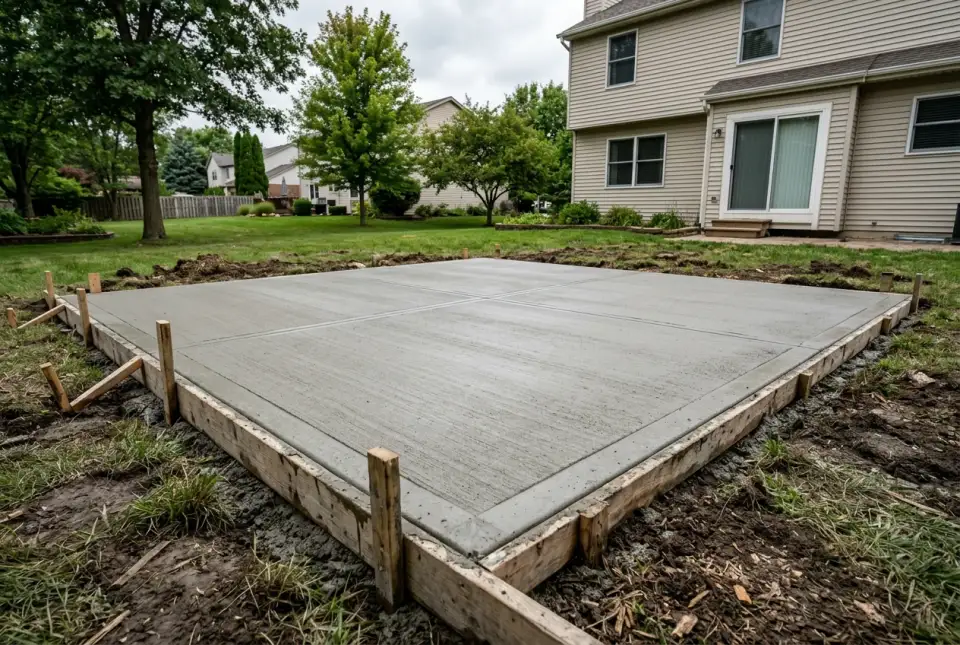
The table covers the sizes people ask about most, from a 10 × 10 patch to a 30 × 40 shop floor, priced three ways: a typical installed job, the concrete alone delivered as ready-mix, and the concrete alone in 80 lb bags.
| Slab | Installed | Concrete only, ready-mix | Concrete only, 80 lb bags |
|---|---|---|---|
| 10 × 10 ft, 100 sq ft · 1.36 yd³ | $610–$1,030 | $295–$390 | $385–$400, 62 bags |
| 12 × 12 ft, 144 sq ft · 1.96 yd³ | $880–$1,490 | $395–$520 | $550–$570, 88 bags |
| 20 × 20 ft, 400 sq ft · 5.43 yd³ | $2,450–$4,130 | $995–$1,270 | $1,530–$1,590, 245 bags |
| 24 × 24 ft, 576 sq ft · 7.82 yd³ | $3,530–$5,950 | $1,410–$1,790 | $2,200–$2,280, 352 bags |
| 30 × 40 ft, 1,200 sq ft · 16.3 yd³ | $7,340–$12,400 | $2,180–$2,730 | $4,580–$4,750, 734 bags |
4 in thick. Installed uses the typical $6–$10.25 per sq ft. Concrete only includes 10% extra, ready-mix at $130–$162 per cubic yard, a short-load fee on orders under a full truck and a delivery fee; bags at $6.24–6.47 each. National typical prices, 2023–2026 sources.
The installed column scales with area, but real quotes for small slabs often don’t. A crew still makes the trip, sets forms and pays the delivery fee for a 6 × 6 pad, which is why a contractor can quote $20 or $40 a square foot for a tiny slab and $8 for a big one. If you’re pricing something under about 100 square feet, ask each contractor for a lump sum and compare the totals.
What drives the price of a concrete slab
- Thickness. Concrete is sold by volume, so a 6 in slab needs 50% more than a 4 in one. Patios and walks need at least 4 in; slabs that carry heavier vehicles start at 5 in.
- Order size. A ready-mix truck holds about 9–11 cubic yards. Order much less and you pay a short-load fee, typically $42–$55 per cubic yard, or a flat charge.
- Base preparation. The American Concrete Institute calls for a 4 in granular base under a slab. Excavating, hauling soil away and compacting stone adds material and machine time.
- Forms and reinforcement. Lumber forms, wire mesh or rebar, and the chairs that hold them up are their own lines on a good quote.
- Finish. A plain broom finish is the baseline. Color, stamping and exposed aggregate cost more; the concrete patio cost guide prices each finish.
- Access. If the truck can’t reach the forms, the concrete has to be pumped. Suppliers list a pump at $300–$450 per pour, and cost guides put pump trucks at $148–$205 an hour.
- Removing an old slab. Breaking up and hauling away old concrete typically adds $2.25–$6.75 per square foot.
- Region and permits. Supplier list prices for ready-mix range from $115 to $195 a yard across the states we checked. Many towns require a permit for slabs; your building department will tell you the fee.
Pouring a 20 × 20 ft slab yourself vs hiring a contractor
Take a 20 × 20 ft slab, 4 inches thick, on a 4 in crushed-stone base, with each part priced at national typical prices.
The concrete: 400 sq ft × 4 in = 133.3 cubic feet = 4.94 cubic yards, or 5.43 with 10% extra. At $130–$162 a yard that’s $705–$880, plus a short-load fee of $230–$295 for ordering less than a full truck and $60–$95 in delivery and environmental fees: $995–$1,270 delivered.
For the base, crusher run packs down hard:
- Area: 20 ft × 20 ft = 400 sq ft; × 4 in deep = 133 cu ft.
- 133 cu ft ÷ 27 = 4.94 cubic yards.
- Adding 33% for compaction and 5% extra for waste gives 6.9 cubic yards.
- Rounded up to the next 0.5 cubic yard: order 7 cubic yards.
- Weight of crusher run: 8.4–10.3 tons, depending on moisture and grading.
At the typical $24–$34 a ton, 8.4–10.3 tons of crusher run costs about $200–$350, plus a delivery fee of $50–$150.
So the materials for a DIY pour come to roughly $1,250–$1,770, before forms, tools, a plate compactor rental and any reinforcement. A typical installed job for the same slab is $2,450–$4,130. HomeGuide puts labor alone at $3–$5 per square foot. The median wage for cement masons and concrete finishers was $27.41 an hour in May 2025 (Bureau of Labor Statistics), and a contractor charges more per hour because the rate also covers insurance, equipment and overhead.
Finishing is the hard part. Five and a half yards of concrete arrive at once and have to be placed, leveled and finished before they set. If you haven’t done it before, hire a finisher for the pour, even if you do the base and forms yourself.
Bags or ready-mix?
An 80 lb bag yields 0.6 cu ft, so a cubic yard takes 45 bags, about $280–$290 at $6.24–$6.47 a bag. Ready-mix costs less per yard but carries delivery and short-load fees, so tiny jobs are cheaper in bags and anything larger is cheaper by truck.
At national typical prices the break-even falls somewhere between about half a yard and 1¼ cubic yards, which is a 4 in slab of roughly 40 to 90 square feet. Below that, use bags; above it, call a ready-mix supplier. Cost aside, mixing 45 bags per yard by hand or with a small mixer is hard work, and the first batches start to set while you mix the last ones.
Concrete pads for sheds, hot tubs and AC units
Pads are small enough that the choice between bags and a truck matters. Check the manufacturer’s installation guide for a hot tub’s required pad thickness; the table below uses 4 inches.
| Slab | Installed | Concrete only, ready-mix | Concrete only, 80 lb bags |
|---|---|---|---|
| 6 × 6 ft, 36 sq ft · 0.49 yd³ | $220–$370 | $145–$200 | $135–$140, 22 bags |
| 8 × 8 ft, 64 sq ft · 0.87 yd³ | $390–$660 | $210–$280 | $250–$260, 40 bags |
| 8 × 10 ft, 80 sq ft · 1.09 yd³ | $490–$825 | $245–$330 | $305–$315, 49 bags |
| 10 × 12 ft, 120 sq ft · 1.63 yd³ | $735–$1,240 | $340–$445 | $460–$480, 74 bags |
4 in thick. Installed uses the typical $6–$10.25 per sq ft. Concrete only includes 10% extra, ready-mix at $130–$162 per cubic yard, a short-load fee on orders under a full truck and a delivery fee; bags at $6.24–6.47 each. National typical prices, 2023–2026 sources.
What to ask a concrete contractor
- How thick will the slab be, and what goes under it: how much base, compacted how?
- What reinforcement do you include, and how will it be held up in the slab during the pour?
- Is the ready-mix price in the quote, and does it include short-load, delivery or pump fees?
- Who removes the old slab, the excavated soil and the forms afterward?
- Will you cut or tool control joints, and where?
- Who pulls the permit, if one is needed, and is it in the price?
- What finish is included, and is curing part of the job?
How to read a concrete quote
First check the volume. Multiply length × width in feet by the thickness in inches and divide by 324 to get cubic yards: a 12 × 40 ft slab at 4 inches is 5.93 cubic yards, or 6.52 with 10% extra. The concrete calculator works out footings, columns and steps the same way. If a quote lists noticeably more concrete, ask why.
Then convert the total to a price per square foot and compare it with the typical range. Say you’re quoted about $7,000 for a 12 × 40 ft slab: that’s $14.58 a square foot, above the typical $6–$10.25. The concrete for that slab costs about $1,180–$1,510 delivered, so roughly $5,500 of the quote was labor, base, forms and overhead. Access, demolition, a thick base or a busy season can all push a price that high, so ask what’s included and get a second quote before deciding. The quote checker in the calculator above does this math for your own numbers.
Finally, look for what’s missing. If a low quote leaves out the base, the reinforcement or haul-away, add what you’d pay for those separately before you compare it with the others.